
Are you confused about the difference between a hoist and a crane? You’re not alone.
Many people use these terms interchangeably, but they actually refer to different machines with unique functions. Understanding how each works can save you time, money, and frustration—whether you’re managing a construction site, a warehouse, or just curious about heavy lifting equipment.
You’ll discover the key differences that set hoists and cranes apart, helping you make smarter choices for your projects. Keep reading to clear up the confusion once and for all.
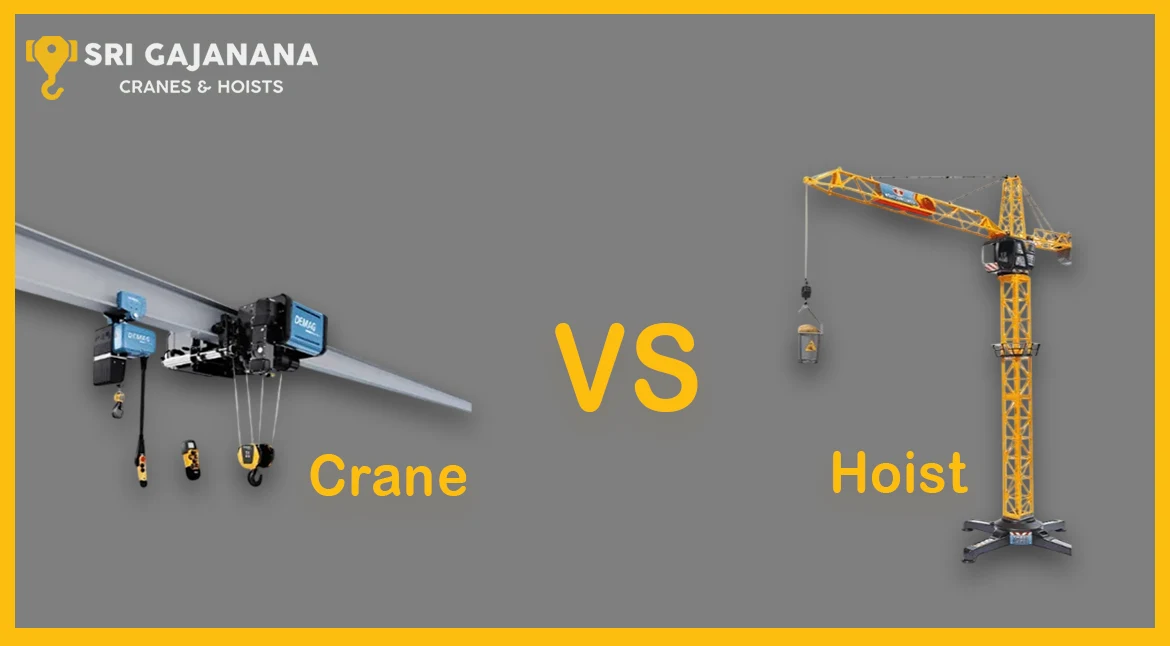
Credit: srigajananacranes.com
Hoist Basics
A hoist is a simple machine used to lift and lower heavy loads. It uses a rope or chain wrapped around a drum or lift-wheel. Hoists make it easier to move objects that are too heavy for people to carry.
Hoists are common in many industries. They help workers lift materials safely and quickly. Understanding the basics of hoists is important before comparing them to cranes.
Types Of Hoists
There are several types of hoists. Manual hoists require human effort to lift loads. Electric hoists use motors to lift heavy objects with less effort. Pneumatic hoists work with compressed air, useful in certain environments. Each type suits different tasks and conditions.
Common Uses Of Hoists
Hoists are used in construction, manufacturing, and warehouses. They lift building materials, machinery, and other heavy items. Hoists also help in automotive repair shops to raise engines or parts. They improve safety by reducing the need for manual lifting.
Hoist Components
Key parts of a hoist include the hook, chain or rope, and drum. The hook holds the load securely. The chain or rope wraps around the drum to lift or lower the load. A motor powers electric hoists. Controls help the operator manage the lifting process.
Credit: rmhoist.com
Crane Essentials
Cranes play a vital role in lifting and moving heavy loads on construction sites and factories. They come in many types, each designed for specific tasks. Understanding crane essentials helps you know how they work and where to use them safely.
From small workshops to large building projects, cranes make work easier. Their design and parts allow them to lift heavy materials with precision and strength. Knowing the basics helps in choosing the right crane for the job.
Types Of Cranes
Cranes come in many forms. Some common types include tower cranes, mobile cranes, and overhead cranes. Tower cranes are tall and fixed to the ground. Mobile cranes can move around a site. Overhead cranes run on tracks above the workspace.
Each type suits different tasks. Tower cranes are good for tall buildings. Mobile cranes work well in tight spaces. Overhead cranes lift heavy loads inside factories.
Typical Crane Applications
Cranes help in various industries. Construction sites use them to lift steel beams and concrete. Shipping yards move containers with cranes. Factories use overhead cranes to handle heavy parts. They also assist in loading and unloading goods.
Using cranes speeds up work. They reduce the risk of injury from manual lifting. Cranes also improve safety by controlling heavy loads carefully.
Crane Parts And Functions
Every crane has key parts. The boom is the long arm that lifts loads. The hook holds the load during lifting. The cab is where the operator controls the crane. The counterweight balances the crane to prevent tipping.
The hoist is a device that lifts and lowers loads. It works with ropes or chains. The base supports the crane and keeps it stable. Together, these parts allow the crane to lift heavy objects safely.
Hoist Vs Crane
Understanding the difference between a hoist and a crane helps in choosing the right equipment. Both are essential in lifting tasks but serve unique roles. Knowing their differences improves safety and efficiency at work.
Primary Functions Compared
A hoist lifts and lowers heavy loads vertically. It uses a chain, rope, or wire for lifting. A crane moves loads horizontally and vertically. Cranes can transport materials across distances on a site. Hoists focus on lifting; cranes focus on lifting and moving.
Load Capacity Differences
Hoists usually carry lighter loads compared to cranes. They work well for moderate weight tasks. Cranes handle much heavier and larger loads. The capacity depends on the crane type and size. Choosing the right tool depends on load weight.
Mobility And Operation
Hoists are often fixed in one place or mounted on beams. Operators control them from nearby or remotely. Cranes can be mobile, mounted on trucks, or fixed towers. They require skilled operators for precise movement. Mobility varies greatly between hoists and cranes.
Installation And Setup
Hoists are simpler to install and set up. They attach to existing structures like beams or rails. Cranes need more time and planning to install. Tower cranes need foundations and assembly. Setup complexity depends on the equipment type and use.

Credit: viperwrl.com
Safety Considerations
Safety is very important when using hoists and cranes. These machines lift heavy loads, which can be risky. Proper safety steps help prevent accidents and injuries. Workers must understand how to use these tools safely.
Both hoists and cranes need careful handling and attention. Knowing the right safety rules protects people and equipment. Regular checks and good practices keep the worksite safe.
Hoist Safety Tips
Always check the hoist before use. Look for worn cables or broken parts. Never lift loads beyond the hoist’s weight limit. Keep the area under the load clear. Use proper signals to guide the hoist operator. Stop using the hoist if it makes strange noises.
Crane Safety Practices
Inspect the crane daily before starting work. Make sure the ground is stable and level. Use outriggers if the crane has them. Do not move loads over people or unsafe areas. Follow the crane’s load chart strictly. Train all operators on emergency procedures.
Maintenance Requirements
Regular maintenance is key for safe operation. Lubricate moving parts as recommended. Replace worn cables and hooks immediately. Keep records of all inspections and repairs. Schedule professional inspections yearly. Address any issues quickly to avoid breakdowns.
Choosing Between Hoist And Crane
Choosing between a hoist and a crane depends on several key factors. Both tools help lift heavy loads but serve different roles on a worksite. Understanding these differences helps pick the right equipment for the job. Consider what the project needs, budget limits, and the work environment. These points guide the best choice.
Project Requirements
Think about the weight and size of the load. Hoists are good for lifting loads vertically. Cranes can move loads in many directions. Also, consider how often you need to lift heavy items. Hoists suit repetitive lifting in one spot. Cranes work better for moving loads across distances.
Cost And Efficiency
Hoists generally cost less than cranes. They are simpler machines with fewer parts. Cranes need more money for purchase and upkeep. Choose a hoist for small budgets and simple tasks. Pick a crane for bigger projects needing fast, flexible lifting.
Space And Environment Factors
Hoists need less space and fit smaller areas. Cranes require room to move and operate safely. Think about the height and width of the workspace. Outdoor jobs might need cranes that handle rough conditions. Indoor tasks may work well with hoists due to space limits.
Frequently Asked Questions
What Is The Primary Function Of A Hoist?
A hoist is designed to lift or lower heavy loads vertically. It uses a drum or lift-wheel with a rope or chain. Hoists are commonly used for lifting tasks in workshops and construction sites.
How Does A Crane Differ From A Hoist?
A crane can lift, lower, and move loads horizontally, unlike a hoist. Cranes are larger machines used for heavy-duty lifting and transportation across job sites. Hoists only move loads vertically.
Where Are Hoists Typically Used Compared To Cranes?
Hoists are often used indoors in factories or warehouses for vertical lifting. Cranes are used outdoors on construction sites or docks for heavy lifting and moving. The application depends on load size and movement requirements.
Can A Hoist Operate Without A Crane?
Yes, a hoist can operate independently, mounted on a fixed structure or trolley. It does not require the complex mechanisms of a crane. However, cranes incorporate hoists for lifting within their systems.
Conclusion
Hoists and cranes both lift heavy objects, but they work differently. A hoist moves objects up and down, usually in one spot. A crane moves objects in many directions and covers more area. Choosing the right tool depends on the job needs.
Knowing these differences helps you pick the best equipment. This makes work safer and easier. Keep these points in mind when planning lifting tasks. Understanding hoists and cranes helps you work smarter and faster.
![Read more about the article Smittybilt XRC VS X20 [Complete Comparison & Walkthrough]](https://autopartsguideline.com/wp-content/uploads/2021/09/Smittybilt-XRC-vs-X20-300x185.webp)
![Read more about the article How To Attach Cable To Winch Drum [Step By Step Guide]](https://autopartsguideline.com/wp-content/uploads/2022/05/how-to-attach-cable-to-winch-drum-300x184.webp)